In 1858, Jacques Offenbach composed and staged Orpheus in the Underworld in Paris, a satirical operetta based on the plot of the first melodrama ever written. The operetta mocks the original tragedy in which Orpheus descends into Hades to bring his beloved Eurydice back to life.
The operetta is intended to entertain, and so we find completely distorted situations: the lovers barely tolerate each other, Orpheus who goes to Hades out of duty to public opinion, the Gods who are characters without noble sentiments but devoted to their pleasures, etc.
Ridiculing the first example of melodrama led to scathing and lapidary criticism, which in fact sparked great interest among Parisians, making the operetta an unexpected success (228 performances instead of the few planned).
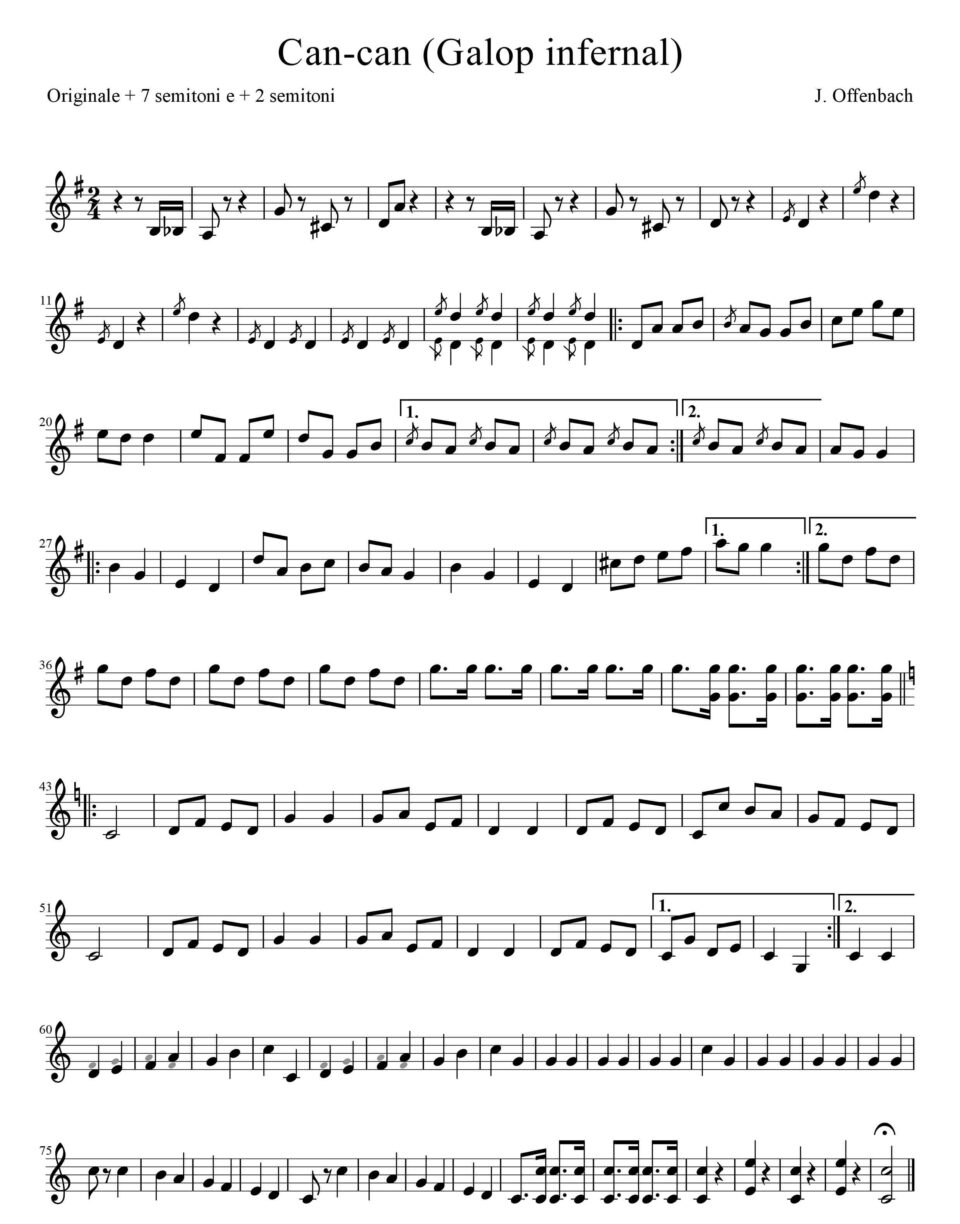
In the second act, Jupiter performs a dance that begins as a minuet but quickly transforms into a wild dance. It’s the Can-can or Galop infernal: the piece that became the most famous of Jacques Offenbach‘s compositions.
The Can-can motif is also sung in the finale by Eurydice, who, having lost the chance to return to life, is entrusted to Bacchus (the god of intoxication), who, along with his court (joyous and drunken), welcomes her joyfully.
The piece of music became even more famous between the late 19th and early 20th centuries, becoming a regular feature in Parisian cabarets such as the Moulin Rouge and the Folies Bergère.
Here are the simplified score notes.
The next post will be dedicated to the final motif of the Galop infernal.